



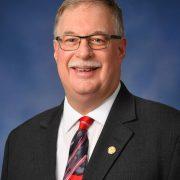
State Rep. John Roth today criticized the Michigan Department of Health and Human Services for allowing Michigan’s largest counties to qualify for federal rural healthcare grants intended to support struggling rural hospitals and providers. Under MDHHS’s eligibility criteria, some of Michigan’s largest counties – like Oakland and Wayne – are labeled as ‘partially rural,’ making them eligible to receive rural healthcare grants.
“Are we really saying that the 22,000 people of Leelanau County must compete with Detroit for rural healthcare funding?” asked Roth, R-Interlochen. “Leelanau and Grand Traverse County are lumped into the same ‘partial rural’ category as Wayne, Oakland, and 13 others. I’ve driven through Northern Michigan, and I’ve driven through Detroit – there is simply no comparison. One has immediate access to top-tier hospitals; the other faces a 90-minute drive for basic care. This proposal reflects a fundamental misunderstanding of rural Michigan.”
The Rural Health Transformation (RHT) program was created under the One Big Beautiful Bill Act of 2025 to improve healthcare access and outcomes in rural communities. States were authorized to apply for a share of $10 billion in federal funding distributed annually.
Despite ranking among the top ten states for rural population, Michigan received just $173.1 million – placing it in the bottom ten states nationwide. Neighboring states such as Iowa ($209 million) and Ohio ($202 million) secured significantly more funding. Roth and other House Republicans say Michigan’s low allocation reflects a poorly prepared application submitted by MDHHS.
They argue that MDHHS not only failed to secure adequate federal funding, but it expanded eligibility definitions in a way that allows Michigan’s largest cities and counties – historically Democratic strongholds – to capture a disproportionate share of rural healthcare dollars.
MDHHS serves as a passthrough agency for RHT grants. Under the department’s criteria, any county deemed “rural” or “partially rural” qualifies for funding, allowing any entity within that county to apply so long as the proposal claims to support rural healthcare.
As a result, all of Wayne County – with roughly 1.8 million residents – qualifies for RHT funding, despite MDHHS identifying only about 100 residents as living in rural areas. Meanwhile, grants must be awarded and distributed by December.
House Republicans also criticized MDHHS for withholding nearly $19 million from Michigan’s RHT allocation for administrative costs, including $2 million for salaries, benefits, and travel for 12 new positions – averaging nearly $170,000 per employee.
###



© 2009 - 2026 Michigan House Republicans. All Rights Reserved.
This site is protected by reCAPTCHA and the Google Privacy Policy and Terms of Service apply.